The End of Unfair Advantage and the Last Moat
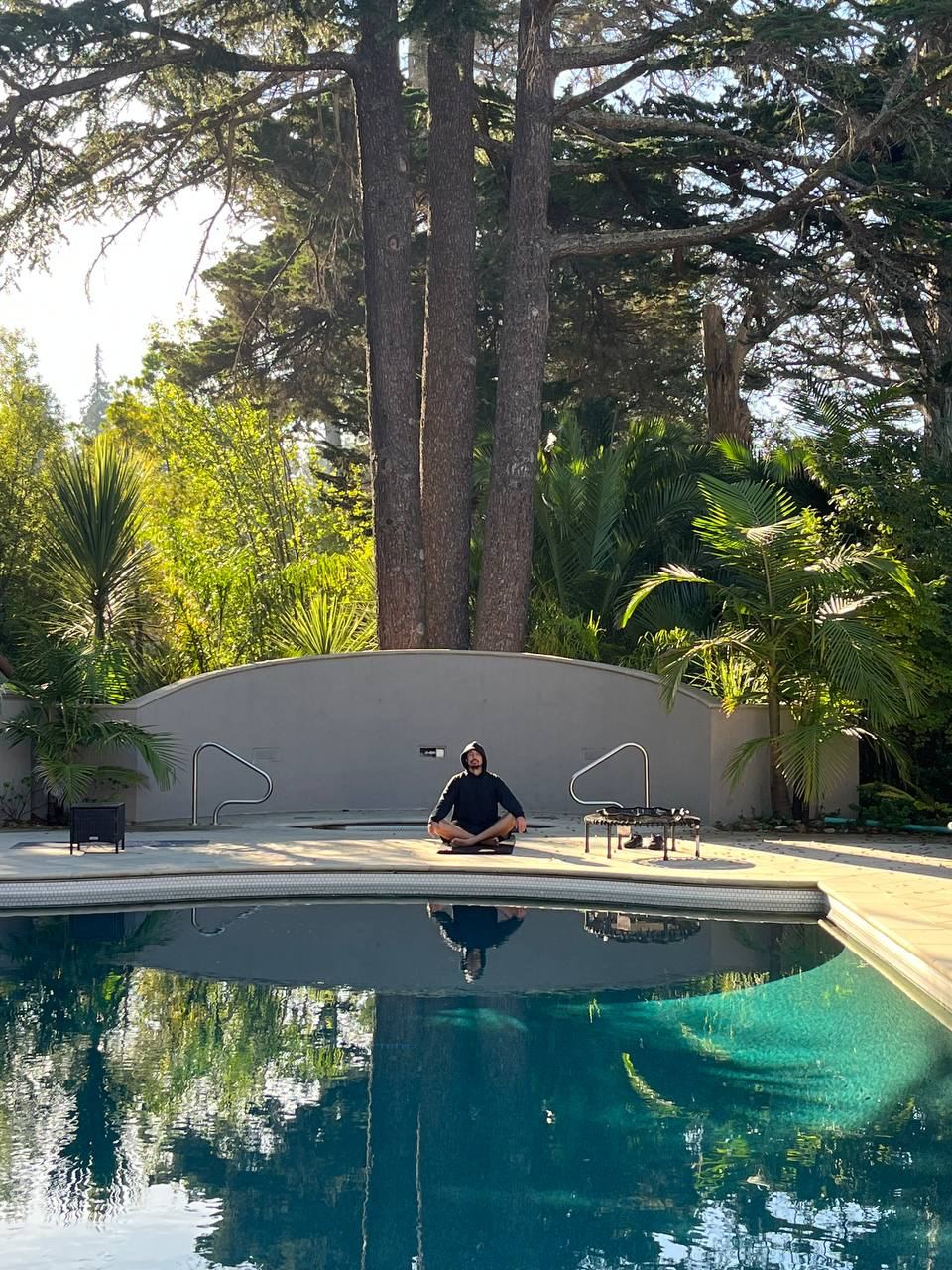
"In business, I look for economic castles protected by unbreachable moats." — Warren Buffett, 1995
"Every great business is built around a secret that's hidden from the outside." — Peter Thiel, 2014
"The biggest competitive advantage is long-term thinking with a broad view of how different systems come together." — Sam Altman, 2019
Three angles on what keeps a business durable: a wall around it, a secret inside it, a horizon long enough for the synthesis to arrive. For forty years, the combination held — microprocessor, browser, phone, cloud, model. Every moat built on top of it — network effects, switching costs, distribution scale — was legitimate in its era.
So where are the moats now?
Ask a founder in 2026. The moat is not doing well.
The cost of shipping a competent replica of almost any software product has collapsed to a few weeks of focused work with AI. Every "product moat" evaporated in real time. Distribution still matters. Data still matters. But the thing the industry used to mean by a moat — a single, defensible, durable position inside one product — was largely a temporary artifact of expensive code.
What survived
What survived isn't a moat. It's the person holding one.
The last unfair advantage is a decade of compounded mastery across several intertwined areas, held inside a single mind, integrated at a layer no org chart can touch. Not one area. Not a year each. Depth on every axis, over years, integrated at the end.
The combinatorial math is blunt. If frontier mastery of any one area takes roughly 10,000 hours, and civilization-scale work requires three or four such areas coordinated, the set of people holding the exact combination is a very small integer. A fund that bets across all four areas ends up with four specialists, four teams, four cap tables — and zero integrations. The integration only exists inside a person who ran all four clocks at once. No coalition reproduces it, because no coalition can pay thirty years of coordinated attention at the price a single life pays.
Elon Musk pulled a version of it — Tesla, SpaceX, Neuralink, X, running concurrently for over a decade. But even he barely pulled it off, and the shape reads more as a movie stunt than a strategy anyone else can follow. One-of-one, not a repeatable model. The rest of us need a different shape.
Alternative architectures
A tight group of young friends with nothing to lose can approximate the single mind — high trust, high bandwidth, shared trajectory. Call it a system on a chip: a coalition with enough cross-wiring to function like one integrated cortex. A good advisor on the outside — a father, an angel, a hands-on VC partner — can backstop the integration where the internal model has gaps. But every extra node adds friction and entropy. Each hand-off between specialties degrades the moat. The single mind stays the ceiling; the approximation trades robustness for reach.
The catch
That shape takes a decade at minimum — and very few have the patience for a decade unless something structural makes patience possible.
Capital works. It produces one in a generation. The other path is a quieter vow — not retreat, not silence in a cabin. Stillness inside the tornado. Regulated in rooms where everyone else is reactive. Patient during arcs that look flat to outsiders. Indifferent to the daily optics of the scene surrounding the work.
Jobs had it post-1997. Buffett has held it continuously in Omaha. Almost no one operating at civilization scale right now can carry it — because it looks from outside like doing nothing, and the scene punishes the look.
The decade itself isn't fixed. It compresses for the founder who started at fourteen. It stretches for anyone choosing deeper learning over speed, life fulfillment over burnout, VC-free funding over compressed timelines, a new language, a new country, a family built in parallel with the work. What's not negotiable is the coincidence — finished mastery must land on a tech wave, and those arrive roughly every fifteen years. Miss the wave with the work still unfinished, and Thiel's advice takes over: join the rocketship with a moat; don't ask which seat.
Reframed
The three quotes said together:
A moat wide enough to survive replication. A secret hidden from the outside. A mind quiet enough to see how the systems come together.
The last unfair advantage isn't a product or a position. It's a person, compounded over a decade, carrying the integration no coalition can reproduce.
If you can feel the shape of it, the work is already underway.